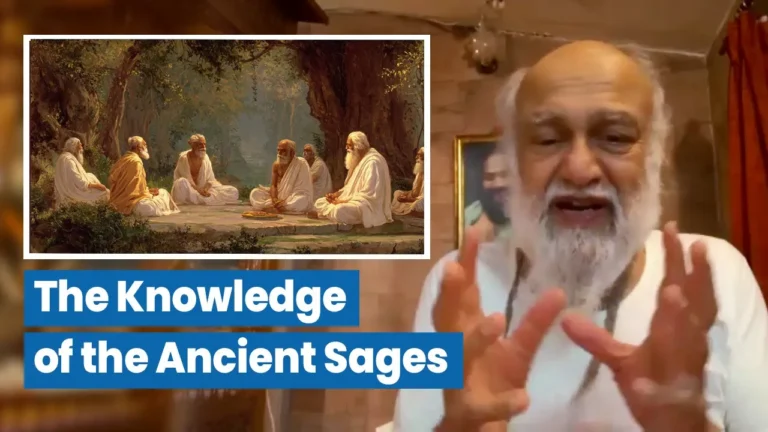
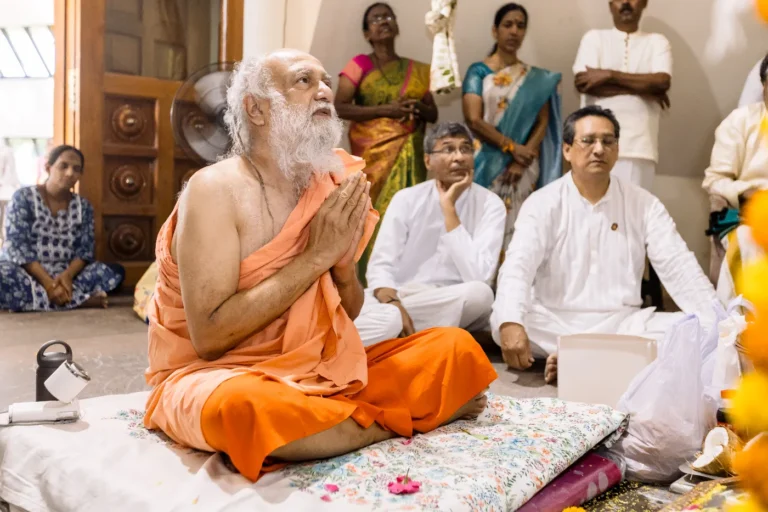
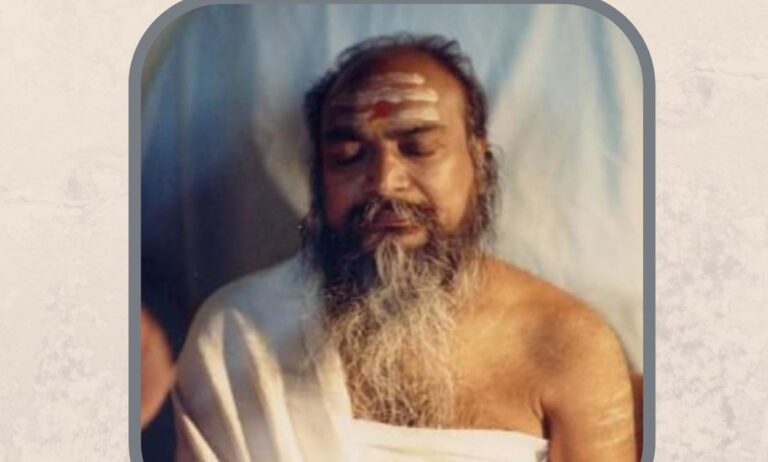
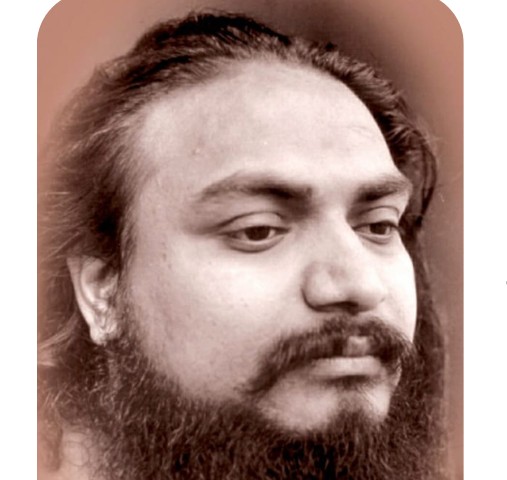
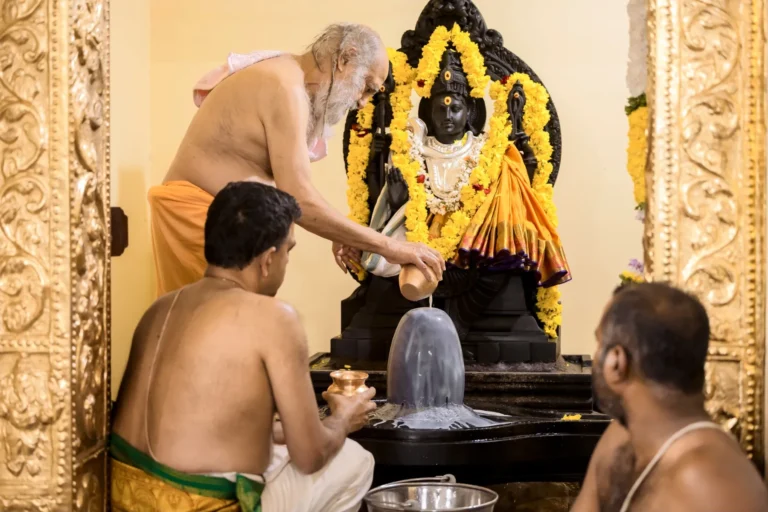
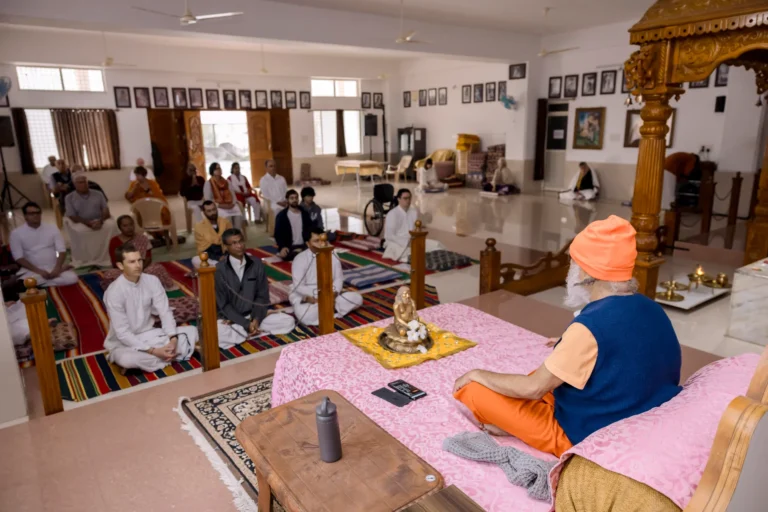
Recorded on 15 March 2026 with US participants
The text explains that a yogi is established in pure consciousness, free from identification with the mind, body, and personal identity. Unlike ordinary people whose minds are absorbed in imaginations and desires, a yogi remains as a detached witness, unaffected by pleasure, pain, praise, or criticism. Though bodily experiences continue, mental suffering and reactions cease due to the absence of desire and ego.
Through meditation and sustained inner silence, the mind dissolves into the Self, where true knowledge is revealed automatically. In this state, all dualities—such as good and evil, gain and loss, life and death—lose significance. The yogi sees the same Self everywhere and acts in the world without attachment or a sense of doership.
Ultimately, when all thoughts and imaginations end, the yogi abides in an indescribable state of Supreme Peace, contentment, and freedom, beyond fear, desire, and mental disturbance.
0:00 Intro
1:11 How does a Yogi view the world or life?
6:30 Does a Yogi no longer see himself as a person?
7:03 Does a Yogi see himself as the witness, as just the consciousness?
7:36 How do you jump across the abyss between the changing world and desires, to the desireless, changeless reality?
10:23 Verse 13. “A Yogi is free from attachment to all objects and actions.”
13:56 “Once liberation is achieved, a need for anything else never occurs.”
17:58 When the mind becomes completely silent, it shines forth with this true knowledge. It wasn’t learned from books.
22:35 Is there a point when the mind becomes silent, where true knowledge just appears, or comes to you?
23:51 And does all ignorance, and false belief, just vanish at that time?
24:38 If you quiet your mind and you lose all desire and there’s nothing to achieve in the world, what allows the body to move, to function and perform action?
26:49 Why does knowing the Self bring Supreme Peace and perfect contentment to the mind?
28:43 Verse 15. “A Yogi always sees the Self everywhere.”
31:03 The Yogi identifies with being pure consciousness. How does he see the world?
32:08 Verse 16. From the standpoint of just being a person, it sounds pretty callous, but from the standpoint of a Yogi, everything seems all proper.
33:34 It seems that you still have thoughts, ideas and imaginations?
35:30 Do Yogis daydream?
36:33 Dreams can come up because the brain generates those?
37:28 Verse 17. A Yogi’s consciousness is always detached.
40:15 Could you elaborate on the consciousness of existence, what that is and how it merges into the Self?
41:42 The abyss between the changing world and non-changing existence.
44:09 A Yogi does not perform activities, though it might appear that they act.
47:08 Verse 20. For a Yogi, no depression or dullness would ever occur.
49:23 The state of a Yogi and a guru, are these two terms synonymous? Like, is every Yogi a guru?
50:38 Is the importance of a guru always in the faith of the disciple?
51:29 If Babaji suggests something to a disciple, is that because the disciple was looking for that suggestion?
52:09 If a Yogi does not have compassion, why do Yogis bless people?
53:13 For a householder, if they reach samadhi and there is no motivation left, how would they care for their family?
55:00 Is it true that some Yogis take the body with them when they pass?
55:44 Does black magic exist?
“The True Knower”, Pt3- Ashtavakra Samhita | In Quest of Truth – Babaji Q&A, No. 269
YouTube link: https://youtu.be/22LNKCW53xs
Recorded on 15 March 2026 with US participants
Shri Babaji:
Yes. Agastya, so, look forward for your questions and thank you for helping me to hold this session. I think I’m ready to take your questions and whatever you want to do.
Question:
Thank You, Baba. Thank you everyone for joining today. We will be continuing with the Ashtavakra Gita and Baba commenting on His commentary.
We’re on Chapter 17 verses 13 to 20. We will hopefully complete that chapter today, titled “The True Knower”. In this chapter, Ashtavakra is speaking to His disciple King Janaka, and He’s describing the life of a Yogi basically Baba, it seems.
We’ll go through the questions and Baba, whenever you’d like to make a comment, please do.
One thing, Baba, I think it would be helpful to understand more about how a Yogi views the world or life, because as unenlightened people, we view the world much differently than a Yogi. We’re accustomed to seeing ourselves as bodies having consciousness, and we find it difficult to imagine that we’re actually consciousness having bodies.
Shri Babaji:
You see, for a Yogi, he doesn’t have to imagine anymore the Self as the consciousness; he is settled into that consciousness. The consciousness is in itself. Earlier, means before enlightenment or Self-Realization for an ordinary person, the consciousness would be preoccupied with imaginations. It imagines and gets involved in that imagination, thus its attention is always sucked into the imagination, so thus it comes to be known as the mind. It is the Self, actually; mind is nothing but you. But there we call it mind because it is preoccupied with its imaginations. Whereas that process or that stage is over for a Yogi. For a Yogi it is always in the awareness, he is settled in the Self.
Just like you are fully aware that you are sitting on a chair and just watching the movie. Once you come to this stage, the movie thrill may go away. Just to say, the world’s thrill may go away; simply a picture is there, an appearance is there, and things are happening. No thrilling or special effects will happen in a Yogi’s consciousness, like a fear or a panic or a reality or a truth, happiness, unhappiness. If some incident is going to happen, somebody criticizes, an ordinary person will be so deeply hurt and he will lose temper and he would like to hit back again, but that effect is all gone in a Yogi’s consciousness—it just doesn’t matter. Very rarely, unless it is very much necessary for a larger cause – that ego we maintain, the Guru’s institution which can teach this Ultimate Truth.
Now, you see, in this illusory world we have to protect and take care of that Ultimate Truth’s knowledge and wisdom, that method which can take one to that Ultimate Truth – if the Guru has established an institution where people can come, sit and meditate – that much only he will act upon. For personal things he will simply forego, he won’t bother much. So many times, hundreds of times, people may criticize. We get to hear, “Oh, they don’t like you now, they want you to step down, or they want to take away the powers of the chairman”. So many things, anything could be coming, but these things don’t really matter for a Yogi.
So those are some of the clues I can give. One is, he is always in peace, unaffected by the appearance of the world, because this body itself is a part of the appearance, thus it will get to see the world through the physical eyes. Because the consciousness is in touch with the brain, a little bit of ego, so thus, this appearance will be visible for a Yogi. But a Yogi will be just like a witness. He just gets to see; he doesn’t get involved mentally. I repeat, mentally, he does not get involved. He doesn’t get affected thus, either by happiness or unhappiness of the world. He is already in peace. He doesn’t need any happiness of the world. So, doesn’t worry about the unhappiness of the world also, because he has no desire. When he has no desire, there is nothing of this world that can create either happiness or unhappiness. Some of the points to give a clue.
Question:
So, Baba, does a Yogi no longer see himself as a person?
Shri Babaji:
Yeah, that personality… because the consciousness has shifted from the physical body, though the consciousness is in touch with the brain. Because of that, the body, if you prick it with a pin, pain will be there. A Yogi can feel the pain bodily when it happens, but mentally it will not affect so much. He will not suffer mentally. So that is the difference. Bodily he might suffer, the pain will be there, but mentally he will not suffer. So that’s how it will happen.
Question:
Baba, does a Yogi see himself as the witness, as just the consciousness?
Shri Babaji:
He just witnesses the world, just to tell. But at all times he won’t be thinking, “Oh, I am only a witness. I don’t have to do anything”. That type of thoughts won’t be coming. This, practically he’ll just get to see and will be only a witness. He is not attached to become anything.
Question:
So, Baba, the abyss between the changing world and desires, what we’d call the unreal, because it’s temporary, how do you jump across that to the desireless, changeless reality? What makes the mind become completely still and jump across that?
Shri Babaji:
When the mind gets absorbed into the Self, that Self is still, totally still. It has no thought or relative effects, all are gone there. It simply exists in itself. Just like the space exists in itself. Space does not exist in any other thing, means it doesn’t need any other object for its existence, it simply exists in itself. That is the truth. Though it would appear that space exists in a box, space exists inside a room, it is only an illusion. The space is simply free, all-pervaded. It simply exists in itself. Just like that, a consciousness of a Yogi exists in itself. So thus, his awareness is on the Self always, so he doesn’t get carried away by the appearance of the world. So thus, desires don’t keep cropping up. A hunger might happen, some food might be taken, but it will not mentally suffer. The mental suffering is gone. He will not be worried. If at all such a circumstance comes that no food is available at all, he will not be frightened. He will not get panicked. He will not start worrying, “Now, what will happen? What next?” If the world has to come to an end, that’s it, there is no fear or panic about “What next, what will happen now?” If it has to go, it will go. That’s it.
Question:
Baba, this chapter, which we’ll get to now, it helps me if I try to understand it through the eyes of a Yogi, rather than the eyes of a person. That means seeing it from the standpoint of being consciousness, pure consciousness, rather than a person or a human being.
Okay, last time we completed verse 12, and now we’re starting with verse 13.
“Neither blaming nor praising, neither pleased nor angry, uninterested in giving or taking, ever free of all attachment and expectations.”
You comment, “Sometimes people may see a Yogi pulling up a student or showing annoyance, appreciating something or pointing out a mistake. In spite of all these actions, a Yogi is totally free from these dualities of either accusing or praising somebody, becoming neither excited and happy nor annoyed. A Yogi is free from attachment to all objects and actions.”
Shri Babaji:
Yeah, there are no such desires arising all the time. If necessary for a certain action, see, if I have students, if I need to teach them proper lessons to be disciplined, not to allow them to deviate from the path. They should not become casual and start enjoying life and forget their path of meditation at all – at that time, I may need to pull them up and discipline them sometimes.
For that purpose, I have to remind myself again and again, remember, and then pull them up. Otherwise, they can take me for granted. Nothing occurs to me sometimes. But if I see them again and again, then this happens, “Oh, I need to act upon. If I don’t tell, they will take me for granted and they will simply go on their own path.” So that type of thing, action happens.
We kept quiet when somebody tried to cut a tree. That person was also a devotee of my Guru, so we kept quiet, didn’t react, didn’t react. When they crossed all boundaries, then we had to take an action. When we reacted, I reacted with full thrust force. “This is wrong what you are doing, because this is a public utility place, not any one person’s property.” Look at Swamiji, my Guru, He did not keep this as His personal property. This was such a big palatial building, some queen donated it to him. He vested it in a trust so that all the public can come, sit down, meditate. So, now also, at the time of meditation, at the time of the satsang, anybody can come. We don’t stop them, as long as they follow the satsanga or the spiritual exercises. As long as they seriously come for meditation, they are welcome. So, that is the purpose.
To defend this we may act upon, but still there is no attachment. I know very well that I’m not going to pack up and take this property with me when I drop the body. The body itself is not going to go with us, this truth is perfectly there, all the twenty-four hours it is there. We don’t forget and we don’t become attached; “Oh, I need to keep holding this.” Some currency might be there, it’s only useful in this world to buy something for this Ashram. So, once this body goes, that currency is of no use, we won’t remember anything at all.
Question:
Thank you, Baba.
Verse 14. “The Great One remains self-poised, the mind still settled even at the sight of a beautiful partner or even death approaching. They are truly Liberated.”
Baba’s comments. “For a Yogi, the sight of a beautiful woman, possession of gold or death of their physical body are all the same. A Yogi remains unmoved and at peace. Such a one is really Liberated. Even if the whole world’s emperorship is given to them or all their positions are taken away, a Yogi doesn’t feel shaken in any way. A Yogi is ever the silent one, established consciously in the Self and totally contented. Once this status is achieved, as Supreme Peace descends, a need for anything else never occurs.”
Shri Babaji:
Exactly, that’s it. That’s what happens. We are here as a duty taking care of this Ashram. If anybody wants to remove us, if the trustees tell “You have to go,” we are happy, we will go. Even thirty years ago, I told, if the trustees remove us, I will go and sit under a tree; as long as the body is there.
One day, this body will go. Whether I am sitting here inside the Ashram or going out under a tree, the body will get dropped. The body will not say, “Oh, you are inside the Ashram building, you don’t have to die.” It doesn’t happen like that. When death comes, it will come wherever you are sitting. You have to go. This truth we are very well aware all the time. We don’t forget, and thus we are simply performing a duty towards our Guru and this beautiful Knowledge.
That is what we can pray to that Ultimate Truth, “As long as the creation is there, please help that this beautiful Knowledge is preserved and passed on to the next generation, next generation, so that the coming generations may get revived in their consciousness.” How useful, how necessary.
That’s how a few days ago, in the last week Zoom also I told, “Death itself is not at all a tragedy. The tragedy is living in this world without knowing who you really are. That is the tragedy,” I said. So, to preserve this knowledge so that everybody can understand, we need to know ourselves—that itself is a great thing. If it occurs to anybody, all the participants are here, and this may go on recorded, on YouTube also it is presented, if only they can realize we need to know ourselves. It is necessary. That is the first priority, just like we need to have food.
Today, now, when the war is going on somewhere else, everybody is worried. “What happens if the food shortage happens? What happens if the water shortage happens? What happens if we are unable to travel; energy shortage happens?” They keep worrying for so many things. In the same way, they need to ponder, “Oh, we need to know ourselves.” Before this body goes – this body is an opportunity. If the death takes away this body, this won’t come back again. Somebody can take away our cell phone, but they might bring it back and return it. But once the body is taken away, it won’t be returned – finished.
Question:
Baba, of course you’re giving us knowledge, this kind of mental knowledge, but the source of the knowledge you’re giving us wasn’t learned from books. It seems, when the mind becomes completely silent, it shines forth with this true knowledge. Does it all just come spontaneously?
Shri Babaji:
You see, reading a book on this particular topic – like Ashtavakra Samhita, we have written a commentary – it can be helpful to motivate, to make you start pondering, contemplate. But this book itself cannot give you Self-Realization. You have to sit down and quieten your mind. That sadhana must happen. That only that can take you towards enlightenment or Self-Realization.
That sadhana must happen; that’s what we call meditation, and tapas, eventually. So thus, books; we also have published books. There is no wrong in reading a book. It can motivate you. It can give you some clues for what you are supposed to achieve.
So, long, long ago, fifty-five years ago when we read Yoga Vasistha, we got one clue – everything is in its place and is alright. There is nothing we have to bother, “This is not okay, this is not okay, this is not okay”. The only problem that has happened is our own mind, which is not all right just now, because it is preoccupied with its own imaginations. We have to quieten this. This first realization occurred, then we got into the job.
Now, keep it quiet: while working with the Guru, while serving the Guru, serving the Ashram, while the Guru scolded or anybody criticized, anybody made fun. People used to make fun also. Some big devotees, rich devotees, used to come, “Oh, you are in the Ashram for the last ten years, you should have reached great heights”. I kept quiet. What we have achieved, how can they know? Reaching a great height doesn’t mean I have to grow two horns on my head and then they will recognize, “Oh, you have reached a great height”.
They did not know how to observe the quietness of the mind. They simply commented. I kept quiet; it is better. “We need to keep quiet – that is more important than listening to these people’s comments, that is not important. Let the Master keep scolding. He has taught us this beautiful knowledge and wisdom that we have to quieten the mind. We are grateful to You, Master, throughout my life, You can keep scolding me. For that, I will surrender to You in return for the beautiful Knowledge You have given. I am Yours now.”
Like that, we kept quiet, we practiced. Then onwards we got into the job seriously. For twenty years, keeping quiet became the priority; the primary exercise – mentally keeping quiet.
Many people came, “Why are you so silent? Why don’t you say something? You should do some action, you should tell what the truth is.” Nothing became important for me to present myself about the truth. If somebody is criticizing or finding fault with me, it did not become so important that I have to present myself, “I am all right, I have not done anything wrong.” “If you are thinking that I have done wrong, let it be so, no problem. That’s not important for me.” That stage came in our mind as a young boy, so we just kept quiet.
Question:
Baba, You started out with very little ego then.
Shri Babaji:
Thus I think, unknown to me, the ego simply disappeared. Personality also disappeared. I thought, “There is no Seenu, there is no Diksit, nobody is there, so why worry? They don’t know who I am. They are simply criticizing or making fun, let them do it. They are happy by watching this body, let them become happy. I have to keep quiet.” We practiced and we became quiet.
Question:
So Baba, turning back to the question, is there a point when the mind becomes silent, where true Knowledge just appears, comes to you?
Shri Babaji:
Exactly, that I can guarantee to anybody. You just achieve silence of your mind, instantly the Truth is revealed automatically. Because, I have told, the mind has consciousness and energy combination. Consciousness means, wherever that consciousness gets applied, it becomes aware of that. Now I’m not telling you or your consciousness, I’m just talking of the consciousness.
Now the consciousness is applied to its own imaginations – that is why that consciousness is not aware of itself. So, when it becomes quiet, automatically it is aware. There are no relatives that somebody has to come and give you a gold medal, there is no such thing. Simply the moment you can become quiet, it is revealed and that is the greatest wonder.
Question:
And does all the ignorance, all the false belief just vanish at that time?
Shri Babaji:
Every idea drops. The ‘I’ also drops. The personality drops. Every idea drops. Either you light one incense stick, it’s okay; if you don’t have an incense stick, it is okay. God is not going to get annoyed. Only we are going to lose if your mind is not quiet and is distracted, it is running away – that is the loss.
If we are unable to offer flowers, there is no loss. If you cannot break a coconut, there is no loss. Your worship can reach the Ultimate Truth if your mind is quiet.
Question:
Baba, if you quiet your mind and you lose all desire and there’s nothing to achieve in the world, what allows the body to move, to continue to function and perform action?
Shri Babaji:
You see, most of the time, it could be a mechanical thing. I’ll try to tell. It is difficult to put into language. Like, years ago, fifty-five years ago when we saw Swamiji and fell in love – when we fell in love and then when we came [to serve], in our mental criteria He was the Divinity for me, Parabrahman; He was the Parabrahman. So, that always has been there – I think that has sat as a small amount of ego, which is in touch with the brain. So, that is what is making this body to be remaining in this world.
You see, this thing just a while ago I told, if at all we pray, we pray to the Ultimate Truth; may this beautiful Knowledge be preserved. May this awaken the people. ‘Awakening’ means, they should awaken to the thought, “I need to know myself”. May everybody realize meditation means they have to quieten the mind and automatically it is revealed. Nothing else – don’t expect anything else to happen in the meditation; no color, no visions, no botheration, just quieten, silence – like this. So, these become small, small egos which crop up. That’s why people are able to receive; today a hundred people are here, sitting, meditating with us, listening to our answers; so they are destined. Because they are destined to listen to us, this is coming out. For this to come out, if there has to be a little bit of ego, that also is no problem.
Question:
Baba, why does knowing the Self bring Supreme Peace and perfect contentment to the mind?
Shri Babaji:
Because that Self does not need anything else for its existence. See, existence is the most important thing for any individual. When this existence is threatened only, they go into a conflict. When they are totally assured that they are totally secure, nothing, no external object, no power can disturb their existence. They are secure. When they are secure, the contentment is automatically there. So, no desire needs to be there, it is already fulfilled. Everything is there. Only when there is a desire, contentment disappears. Satisfaction is not there; “I need this thing.” So, then the disturbance happens. Then the ‘me’ also arises, ‘mine’ also starts arising. Once all this has gone, it’s all subsided. ‘Manolaya’, it is just settled peacefully, the ‘I’ is not there. That is how that is supremely peaceful, because it doesn’t need anything.
Swamiji once said, “A person becomes poor by desires. If one can remain contented, he is the emperor. If the richest person in the world has desires, he is the poorest. If the poorest person has no desires, he is contented, he is the richest.”
Question:
Thank You, Baba. Verse 15.
“Seeing the same everywhere, that One perceives no difference between happiness and unhappiness, man or woman, prosperity or scarcity.”
Your comments: “A Yogi always sees the Self everywhere. Never mentally identifies any person or object by its appearance. In any situation and under all circumstances, a Yogi sees only the Self. Such a one is really a great samadarshi, one who looks at all and all objects equally with only the Self. Though, for the sake of this world a Yogi might, in their behavior, act as if they identify everything as done by people of the world, in their consciousness, they see only the Self.”
Shri Babaji:
So, in the consciousness, when such a Yogi gets to see only the space that is recognized, the space as the Ultimate Truth. Because a Yogi has experienced this space as the Supreme Consciousness of Existence, not simply a void place. He gets to see that only, everywhere. He recognizes that only. Simply, at all if anytime it happens, “Oh, the same Self is there also. Let the same Self gain the knowledge of itself everywhere, in everything. Just as the peace has descended here, may there be peace for every soul, every individual soul, which is also an illusion, though.” So, he gets to see only that Self, all the time recognizing. Though outside it appears that he is with other things, mentally it doesn’t differentiate for him. Who is who, what is what, for what purpose, because he has no such desires. Whether it is gold or silver or simply iron or simply the mud, it is all the same. The tendency doesn’t come.
Question:
The Yogi identified with being pure consciousness, how does he see those things that come up in the world? How does he see the world?
Shri Babaji:
He gets to see only that same Self inside his consciousness, only the same Self everywhere. He gets to see the same Self everywhere; the same thing that is. So, that’s why a Yogi never curses anybody. Means he doesn’t harm anybody mentally. He blesses everyone.
Question:
He’s not critical of himself.
Shri Babaji:
Swamiji used to tell, “Even if a Yogi slaps somebody, that will be beneficial to that person”. He used to tell this one.
Question:
Okay, Baba, verse 16.
“In that One whose worldly life is exhausted, there is neither compassion nor the desire to harm anyone, neither humility nor arrogance, neither amazement nor agitation of the mind.”
Your comments, Baba: “For a Yogi, there’s no more any worldly life or any world. Consciously, they have transcended all natures of the creation and become one with the Ultimate Truth. Thus, they have neither compassion nor any desire to harm anybody, neither arrogance nor humility. In fact, a Yogi has no analyzations or judgments of anything or anybody, as they are in total peace and have no mental disturbances ever.”
This is what I was saying at the beginning, Baba. If you look at this from the standpoint of just being a person, it sounds pretty callous, but from the standpoint of a Yogi, seeing everything as itself, it seems all proper.
Shri Babaji:
Yeah, the idea of a personality has gone. All ideas have been dropped. There is no concept at all. Concepts have also disappeared.
Question:
Baba, You’ve said, once Self-Realization happens, the mind has become silent, it has merged into pure consciousness. But it seems that you still have thoughts, ideas and imaginations.
Shri Babaji:
You see, if you talk of any thoughts, these thoughts will not be going out of control. Just, you see, I take a white paper, I just write to give you some meaning of teaching, and then it gets erased instantly. It is not going to be there all the time to bother either me or anybody. Thus my mind, if at all it imagines a little bit… I keep telling that even a Self-realized Master, to teach the Ultimate Truth, I have to use the nearest imagination possible for the Truth. So, impossible to imagine the Truth as it is.
So, if you cannot imagine, you cannot teach what the Truth is. We can simply give a clue, thus using the nearest imagination; first achieve quietening – that is the imagination. So thus, it arises, but it is not going to multiply into further thoughts. For ordinary human beings, if you watch all your minds, one thought arises, then another thought arises, then another story picks up, then another story picks up, and you get carried away. And you are unable to stop those thoughts at all. If at all I need to imagine, I imagine one thought, and that job is done, it subsides, settles down composed, “Ssss”, back.
Question:
Baba, do Yogis daydream?
Shri Babaji:
No, because the mind is silent, it cannot daydream. Only when the brain goes into sleep, then it creates a dream, but watching that also, a Yogi is well aware of the Self. Just like he is watching this dream of the world, this dream of the world is the daydream you can call. Other than that, he won’t be sitting and daydreaming. He needs to be active if he needs to be in the world to try to do something. Otherwise, he will keep quiet. You just lock me in a room, keep quiet; I can remain there at peace. Never feel the loneliness, never miss anything at all. Because the mind is silent. It is quiet. The consciousness is totally in itself. It is contented, at peace.
Question:
So, Baba, You’re a witness to the dreams? Dreams come up because the brain is generating them, and You’re just watching?
Shri Babaji:
Yeah, a little bit of consciousness is in touch with the brain, otherwise the body will die. Because this body is alive, this dream also is visible. But this dream, called the world is not affecting my consciousness in any way. So let it be in its own place. I don’t have to worry.
Just because this dream is there, when it is not affecting me, troubling me, why should I curse this world? Let it be.
Question:
Baba, there’s an expression, “Living the dream.” You really are living the dream.
Okay. Verse 17.
“That liberated one neither abhors the objects of the senses nor craves them. They enjoy whatever is attained or not attained, but the consciousness is always detached.”
In my own experience, there has been a lot of peace that has grown over the years. It’s been slow with lots of challenges, but it’s making progress. One of the key things has been the ability to allow things to happen, not just accept, acceptance is one level below that.
You accept what has been attained or not attained; what has happened or not happened. But the next level is where you allow it all to happen spontaneously, without any involvement. I can imagine a much more extreme level of being, where a Self-realized Yogi is just not involved in the mind at all.
Shri Babaji:
Yeah, yeah.
Question:
Ok, continuing with your commentary. “A totally liberated Yogi never craves any object nor shows any strong aversion. A Yogi is above all dualities. Even when they are living in this world, mentally, they’re totally detached. However, though unaffected themselves, a real Yogi behaves according to the norms of society, thus inspiring others in character, culture, and moral values.”
Verse 18. “Abiding in the absolute pure state, the mind settled, that one doesn’t know the alternatives of mental contemplation or non-contemplation, good or evil.”
Your comments. “Though a Yogi might need to behave upholding moral values and justice for a larger cause to teach other ordinary people of this world, a Yogi is mentally above these things, as their mind is totally silent and appears to be void, but it is the consciousness of existence which has merged into the Self, and they are in total Peace. Thus, they have no conflict of good or evil, contemplation and non-contemplation. For a Yogi only the Self is visible.”
Baba, could you elaborate on the consciousness of existence, what that is and how it merges into the Self?
Shri Babaji:
You don’t notice, because the duality is going, the relative existence is disappearing. The ‘I’ is disappearing, so after that, you really don’t notice. It’s like going into a deep sleep; you just disappear and the merger happens. Simply that oneness… At that time, you will see the same thing everywhere. You won’t see any difference based on the physical body. That barrier of the physical body is gone for the consciousness. Otherwise, usually the mind keeps the physical body as a barrier to have the imagination that “I am this personality, I have this status, I am doing this”; things like these keep happening. But for the Yogi that disappears, that barrier is gone. Just like he has become space. He doesn’t see anything. He does not not see anything. It’s like people arguing about existence and non-existence, type.
Question:
I think this is kind of what I was referring to earlier, Baba, about the abyss between the changing world and non-changing existence.
Shri Babaji:
After I started traveling, a few years later, for a question I had told; going into samadhi, taking the mind to total quietness once for all is totally a different skill. Giving up the ego, just exercising the patience to practice remaining quiet mentally is an amazing skill. Once that’s gone, to bring it from that level to the level of brain is definitely another skill. So, that’s what we practiced slowly; only then my teaching also improved, when I practiced. Otherwise, the initial years, it was very dazed. Many times couldn’t teach or couldn’t talk or couldn’t answer. A short thing I would have told and become quiet. Many truths wouldn’t have come out. So, as I practiced that thought experience, spontaneously that keeps coming, keeps coming.
Writing a commentary on these couple of books helped me for these things. When the flow started coming, when I used to type on the computer, sit, just see the meaning; as I went on seeing the meaning, that used to flash now what needs to be typed, automatically, so I went on typing. So, that helped. Like that, mechanically we operate in this world. But that doesn’t affect my mental equilibrium; it remains quiet in total. Once the job is done, it goes, it simply becomes quiet.
Question:
Baba, when we first met, twenty, twenty-one years ago or so, You were much more withdrawn. Like You were saying, You would speak and then You would just turn off.
Shri Babaji:
That’s what I was trying to tell. Those days, it was difficult for me to speak.
Question:
Verse 19. “Having no feeling of ‘me’ or ‘mine’, truly knowing that nothing really exists, all inner desires gone, that One does not perform activities, though it might appear that they act.”
Your comments. “Actually, for the soul, trouble starts when the imagination of ‘me’ and ‘mine’ starts. For a Yogi these two seeds of imagination, ‘me’ and ‘mine’, are not there. Their mind is now pure consciousness, without any desires of acquiring or owning this world and its objects. Bodily, a Yogi might be acting to defend and protect properties and objects of this world for a noble cause, mentally though a Yogi remains unattached. Even when the world goes, mentally they will not be disturbed.”
Shri Babaji:
You see, if ordinary people, they watch themselves, when their body is in action, it keeps reverberating in their mind also. The same actions are all as if it is reflecting. It keeps coming; they are doing this, they are doing that. That keeps picturizing. This thing doesn’t happen for a Yogi. Even if I am moving my hand, standing up or walking a little bit, whatever I am doing or talking, in the consciousness, the relative reverberation has gone. It is finished. For the mind, the relativity, along with the body has disappeared. Inside, the mind is totally quiet. Outside, the body is talking, and it is there. I don’t know from where this is coming. The source must be the Ultimate Truth only. Only the Ultimate Truth can give this knowledge. The ‘I’ personality is not there, so the imagination that I am giving any knowledge doesn’t arise at all.
Question:
It’s just spontaneous knowledge flowing. We prick you and out comes the wisdom.
Shri Babaji:
Like the blood coming out.
Question:
Oh, that’s beautiful, Baba. That kind of explains the knowledge; there’s no real doership. We ask, and then the Divine gives the answer.
Shri Babaji:
Yeah. That’s why no imprints are absorbed, because there is no mind, no individuality. It won’t absorb anything at all.
Question:
Samskaras are finished.
Shri Babaji:
Yes, the future is all stopped.
Question:
Verse 20. “With the mind completely withdrawn and settled, its functions cease and its free of delusion, dreams, and dullness. That indescribable condition is attained wherein the mind’s imaginations have completely evaporated.”
Your comments: “A Yogi might appear sitting quietly as an inert object, or some people might think lazy and casual, but a Yogi’s mind is totally purified. An indescribable state is attained by merging in the Self. The mind is totally evaporated and becomes Pure Consciousness of Existence only. This is the immortal soul. Though the brain might reflect a dream, the Yogi is always aware of the Self and consciously will no more become a victim of the brain’s reflections. Even if a Yogi is sitting quietly, they are not dull, but enjoying Supreme Peace by remaining in the Self, contented. As long as the mind has imaginations, the Self goes unnoticed, thus deluding itself of a supreme peace and awareness of the Self. For a Yogi, when all imaginations have evaporated, there is nothing else except the Self in Supreme Peace, where no depression or dullness would ever occur.
Shri Babaji:
Yeah, dullness or depression happens when you are attracted imagining that there is a relative existence, and miss that existence. You want that as a companionship or somebody, then you start feeling loneliness, or you can become depressed. When no such thing is there at all, so, no place for depression at all.
Question:
Baba, verse 20 was a good summary of pretty much the whole teaching, the whole chapter anyway. Yes.
Thank You, Baba. Do you want to take questions now?
New Questioner:
Pranams Babaji. Babaji, is the state of a Yogi and a Guru, are these two terms synonymous? Like, is every Yogi a Guru?
Shri Babaji:
Not necessarily. If there is somebody learning from a Yogi, for that learning person, that Yogi becomes a Guru. Guru means the one who dispels the darkness of ignorance. For that, a relative personality needs to be there, if the Yogi has to be a Guru. Like if the God has to be a God, there has to be a devotee. Without a devotee, God is no longer God, that type of thing. That is how the Guru-disciple relationship is there. But a Yogi need not have any relative existence; He is in the yoga. He is one with the Ultimate Truth already, so he doesn’t need any other relative existence to remain in the Self. So, that is the difference. The Yogi need not be a Guru, and all Gurus need not be Yogis.
Same Questioner:
So, Babaji, the importance of a Guru is always in the faith of the disciple and whatever questions we ask, and probably that poking thing we were talking about to get words of wisdom, it’s all with the disciple’s intensity to learn that we get it?
Shri Babaji:
Yes, then he needs to have the Guru concept so that he can remain serious and learn from that Yogi. Otherwise a Yogi himself will not have any such vision, desire that “I need to have disciples, somebody needs to learn from me”. If anybody is destined, it will happen like that.
Same Questioner:
If Babaji suggests something to the disciple, is that because the disciple was looking for that suggestion?
Shri Babaji:
Yes. Otherwise, you see, hundreds of devotees might come, we don’t go on suggesting to each and every one. If somebody wants that suggestion, then it’s given. That’s what great saints have said; “You knock, then the door will be opened”.
Same Questioner:
That’s very important. Thank You, Babaji.
New Questioner:
Pranam, Babaji. In one of the verses that Agastya read out, it said that for the Yogi, there is no compassion or humility or arrogance. But if there’s no compassion, why do Yogis bless people? Surely, blessings come from compassion?
Shri Babaji:
You see, ‘the compassion is not there’ is not the right sentence, actually. Always, common people take it in a relative sense only: “If compassion is not shown, that means there is no compassion. There is no compassion means he is not compassionate” – there is no such thing. If a person prays, Yogis become compassionate. If a person wants blessings, then the Yogi becomes compassionate and blesses. It’s demand and supply, type.
New Questioner:
Pranam, Babaji. Babaji, I actually have two questions, but one I think Agastya’s question answered. I was concerned that when we reach the stage of samadhi, there is no motivation left. For a householder, if there is no motivation left, how would they care for their family? So, that was one question. It was partially answered by Agastya’s question. Can you throw more light on this; as a householder, you want to have some level of motivation to serve your family.
Shri Babaji:
It will come, don’t worry, you won’t lose any such motivation. Destiny will automatically induce you into such actions. If you are already a householder, it will induce you to do that. Generally, for understanding, we tell, loving and caring for somebody in this world is not a wrong thing, it is not a desire. Mentally getting agonized or mentally getting attached, all the time worrying, is what is the topic we are discussing.
Like Subrata asked me, if you don’t have compassion, why does the Yogi give a blessing? If it is requested, we are giving the blessing. In the same way, automatically, mechanically, when you see your husband or your children, the destiny will induce you to look after them,help them. In spite of that, you can maintain your mental equilibrium into the silence of Self when you practice to that level.
Same Questioner:
Thank you, Babaji. So next question. You said the body drops, but there have been Yogis like Raghavendra, Meera Bai, when they go, they go to jeeva samadhi – they take the body. Can You throw a little light on that?
Shri Babaji:
This is a tricky question. With due respect to all devotees, faith, and devotion, you did not see anybody going into jeeva samadhi like that, right? You have heard; it could be a myth also – benefit of doubt, we don’t know.
New Questioner:
Hi. Sometimes when I have visited India to visit someone like yourself, there seems to be something that I would call perhaps even black magic. Does it exist? And how can I help if I or somebody else, one of my friends, is affected by that?
Shri Babaji:
No such black magic really exists. Nobody can harm you from a distance like that. Otherwise, you see, we are all educated. The world wouldn’t have been like this. There was no need to fire missiles, do a big war and spend billions of dollars; simply with the black magic one could have finished the other. But it doesn’t happen like that. Only, one needs to be careful. Some people might try to apply some chemicals and try to harm you physically, any such thing. And you must not eat if strangers give you anything to eat – in those things, they can put some chemical, some such medicine. Such things can affect you, but it is not done through black magic, I hundred percent assure you.
Shri Babaji:
It looks, Agastya, like it’s all done. Very wonderful questions came from you. It was so interesting. And we will go to gallery and say bye-bye. Is it okay, Agastya?
Question:
Yes, Baba, thank You.
End of Session